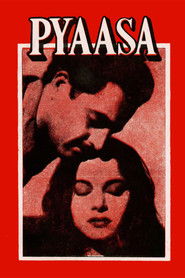
“Pyaasa 1957” is a classic Bollywood film that explores the struggles of a poet trying to find his place in society. The film uses poetry as a metaphor for the protagonist’s inner turmoil and quest for identity. Through his journey, he encounters societal issues such as corruption, greed, and materialism. The film is a powerful commentary on the importance of art and literature in shaping society and individual identity. This timeless masterpiece is an ode to the beauty of poetic expression and its ability to capture the human experience.
CLICK HERE⇟⇟⇟🎞️_Watch Pyaasa 1957 English Subtitles_
Review
In a vast and colorful landscape of Indian cinema, “Pyaasa” stands out as a masterpiece, a cinematic jewel that has mesmerized and inspired millions of viewers worldwide. Directed by the legendary filmmaker Guru Dutt, “Pyaasa” is an epic tale of love, loss, and redemption that transcends cultural boundaries and speaks to the universal human condition.
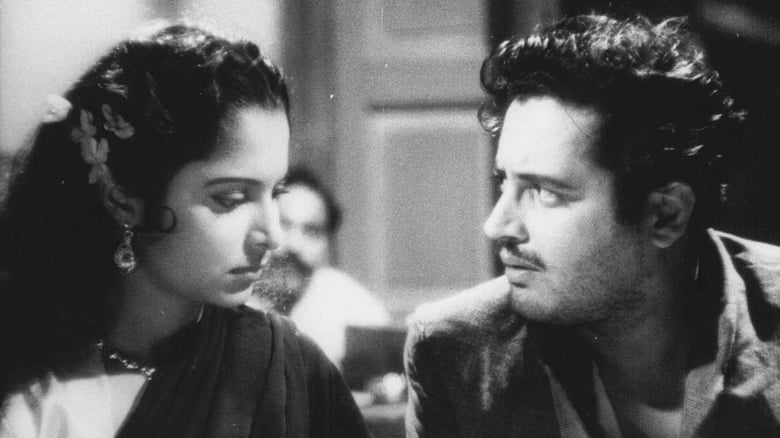
The story follows the journey of Vijay (played by Guru Dutt), a struggling poet who is shunned by society for his unconventional ideas and artistic expression. He seeks refuge in his poetry, pouring his heart and soul into every verse in an attempt to find meaning in a world that seems to have lost its humanity.
As he wanders through the streets of Calcutta, Vijay encounters Gulabo (played by Waheeda Rehman), a prostitute with a heart of gold who sees something special in him. She introduces him to her wealthy client Mr. Ghosh (played by Rehman), who recognizes Vijay’s talent and offers to publish his poems.
However, as Vijay’s star begins to rise, he becomes trapped in a web of greed, jealousy, and betrayal. His former lover Meena (played by Mala Sinha) reappears in his life, causing him to question his choices and his own sanity.
Throughout the film, Dutt weaves together elements of romance, social commentary, and satire with unparalleled skill and sensitivity. From the hauntingly beautiful score by S.D. Burman to the stunning cinematography by V.K. Murthy, every aspect of “Pyaasa” is crafted with meticulous attention to detail.
One of the film’s most memorable scenes takes place at a party thrown by Mr. Ghosh. As Vijay recites one of his poems about love and disillusionment, the guests scoff and ridicule him until Gulabo steps up to defend him with her own rendition of the same poem. The scene is a powerful commentary on the hypocrisy and shallowness of society, as well as a celebration of the transformative power of art.
Despite its critical acclaim and enduring popularity, “Pyaasa” faced initial resistance from Indian censors who deemed it too controversial for release. However, Dutt persevered and eventually won over audiences with his unflinching honesty and fearless exploration of taboo subjects.
In many ways, “Pyaasa” can be seen as a reflection of Dutt’s own struggles as an artist in a society that often fails to appreciate or understand true artistry. His untimely death in 1964 further cemented his legacy as one of India’s greatest filmmakers and visionaries.
Today, “Pyaasa” continues to inspire new generations of artists and film lovers around the world. Its themes of love, creative expression, and social justice are as relevant today as they were more than half a century ago. As Vijay declares in one of his poems: “Don’t let anyone tell you what to do / For your soul is yours alone.”
Technical Data
- Runtime : 146
- Release : 1957-02-19
- Genre : Drama, Romance
- Cast : Guru Dutt as Vijay, Waheeda Rehman as Gulabo, Mala Sinha as Meena, Johnny Walker as Abdul Sattar, Rehman as Mr. Ghosh
- Crew : Guru Dutt as Director, Guru Dutt as Producer, Bhanu Athaiya as Costume Design, Sachin Dev Burman as Original Music Composer, Biren Nag as Art Direction
- Popularity 7.727
- Budget : 0
- Revenue : 0
- Company : Guru Dutt Films Pvt. Ltd.
- Summary : Vijay, a destitute poet, searches for true love while attempting to get his work published. With the assistance of two women in his life, his dream comes true – but at a cost that causes Vijay to rethink his worldview.
- Tagline :
