“Barry Lyndon” is a slow-burning masterpiece directed by Stanley Kubrick. The story follows the rise and fall of an Irish rogue named Redmond Barry. With stunning cinematography reminiscent of classical paintings, Kubrick immerses the audience in 18th-century Europe, where aristocrats play high-stakes games of power and romance. Barry’s ambition drives him to betray his friends and use his charm as a weapon, but ultimately proves futile as he learns that life is a game that no one wins. The film’s meticulous attention to detail and deliberate pacing make it a haunting meditation on the emptiness of wealth and status.
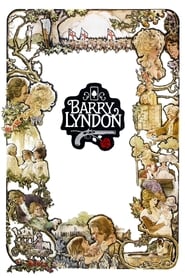
CLICK HERE🠣🠣🠣✔️_Watch Barry Lyndon 1975 English Subtitles_
Review
Have you ever seen a movie that left you breathless and marveling at the sheer beauty of it? That’s exactly what happened to me when I watched Stanley Kubrick’s “Barry Lyndon”. This movie is a stunning masterpiece: a visual feast that transports you back in time to 18th-century Europe. Set against the backdrop of the Seven Years War, this film tells the story of an Irishman named Redmond Barry, who rises from poverty to become a wealthy nobleman.
The storyline is captivating from beginning to end, with twists and turns that keep you on edge. The film is based on the novel “The Luck of Barry Lyndon” by William Makepeace Thackeray, and Kubrick does an excellent job of bringing the story to life. One aspect I loved about the film was its attention to detail. Kubrick was known for his meticulous approach to filmmaking, and “Barry Lyndon” is no exception. Every frame feels like a painting come to life, with rich colors and intricate costumes transporting us back in time.
One interesting fact about “Barry Lyndon”: it was filmed entirely using natural light. This was no easy feat, as Kubrick and his crew had to use special lenses to capture scenes in low lighting conditions. But the result is breathtaking: watching this movie feels like stepping into another world altogether.
The cast is also exceptional, particularly Ryan O’Neal in the lead role of Barry Lyndon. O’Neal’s performance perfectly captures the character’s evolution from humble beginnings to ruthless schemer. He’s joined by talented actors such as Marisa Berenson and Patrick Magee, who add depth and complexity to their respective roles.
There are so many memorable scenes in this film, but one that stands out for me is when Barry duels his stepson Lord Bullingdon (played by Leonard Rossiter). The tension between these two characters has been building throughout the film, and the duel is a satisfying resolution to their conflict. It’s just one example of how Kubrick expertly weaves together different plot threads to create a cohesive and engaging story.
The score by composer Leonard Rosenman is also noteworthy. The music perfectly complements the film’s visual style, with sweeping orchestral pieces that add to the grandeur of the setting. Some of my favorite scenes are accompanied by Rosenman’s music, such as when Barry first arrives at his new estate and surveys his surroundings.
Despite its critical acclaim, “Barry Lyndon” wasn’t a commercial success upon its release in 1975. Some people found the pacing slow or the story too abstract. But in my opinion, this film stands the test of time as a masterpiece of cinema. Its visual style alone is enough to captivate audiences, but when combined with an engaging story and talented cast, it becomes something truly special.
The cinematography in “Barry Lyndon” is also worth mentioning. Kubrick worked with cinematographer John Alcott to capture some truly stunning shots throughout the film. From sweeping landscapes to intimate close-ups, every shot feels like a work of art in its own right.
One quote from the film that has stuck with me is when Barry says: “I have never been untrue to myself.” This line speaks to Barry’s unwavering determination and self-confidence, even in the face of adversity. It’s just one example of how well-written and memorable this film’s dialogue is.
In terms of awards, “Barry Lyndon” didn’t win any Oscars for Best Picture or Best Director (those went to “One Flew Over the Cuckoo’s Nest” and Miloš Forman respectively). However, it did win four Oscars for technical categories such as Costume Design and Art Direction. These awards are well-deserved; every aspect of this film feels meticulously crafted and thought-out.
In my opinion, “Barry Lyndon” is a true masterpiece of cinema. Its attention to detail, engaging storyline, and stunning visuals make it a film that’s worth watching again and again. Whether you’re a fan of historical dramas or just appreciate great filmmaking, this movie is sure to leave an impression. If you haven’t seen it yet, I highly recommend giving it a watch – you won’t be disappointed!
Technical Data

- Runtime : 185
- Release : 1975-11-26
- Genre : Drama, Romance, War
- Cast : Ryan O’Neal as Redmond Barry / Barry Lyndon, Marisa Berenson as Lady Lyndon, Patrick Magee as The Chevalier de Balibari, Hardy Krüger as Capt. Potzdorf, Diana Körner as Lischen
- Crew : Stanley Kubrick as Screenplay, Stanley Kubrick as Director, Stanley Kubrick as Producer, Leonard Rosenman as Original Music Composer, John Alcott as Director of Photography
- Popularity 21.704
- Budget : $11,000,000
- Revenue : $198,992
- Company : Hawk Films, Peregrine, Warner Bros. Pictures
- Summary : An Irish rogue uses his cunning and wit to work his way up the social classes of 18th century England, transforming himself from the humble Redmond Barry into the noble Barry Lyndon.
- Tagline : At long last Redmond Barry became a gentleman—and that was his tragedy.
